
When purchasing a home in North Idaho, most buyers focus on things like the roof, foundation, plumbing, and electrical systems. While those components are extremely important, there is another issue that often goes unnoticed because it cannot be seen, smelled, or tasted—radon gas.
Radon is a naturally occurring radioactive gas that can accumulate inside homes. Because it is invisible and odorless, the only way to know whether a home has elevated radon levels is through proper testing. For homeowners and buyers in communities such as Post Falls, Coeur d’Alene, Hayden, and Rathdrum, understanding radon risks and testing options is an important part of protecting your health and your investment.
What Is Radon?
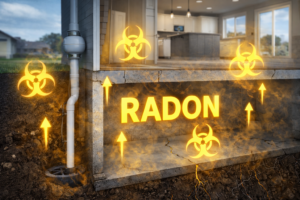
Radon is a gas produced by the natural breakdown of uranium in soil and rock. As the gas forms underground, it can move upward through the soil and enter homes through cracks in foundations, crawlspaces, slab joints, sump pits, or other small openings.
Once radon enters a home, it can become trapped indoors and accumulate to levels that may pose health concerns over time.
According to the Environmental Protection Agency (EPA), radon exposure is the second leading cause of lung cancer in the United States, behind smoking. Because of this risk, radon testing is widely recommended during real estate transactions and for homeowners who want to better understand the air quality in their homes.
According to the EPA radon guidelines, homeowners should take action if radon levels reach 4.0 picocuries per liter (pCi/L) or higher.
Is Radon a Problem in North Idaho?
Radon levels vary from home to home, even within the same neighborhood. However, many parts of Idaho are known to have moderate to elevated radon potential due to regional geology.
The soil conditions and rock formations found throughout North Idaho can allow radon gas to travel through the ground and enter homes. This means that homes in areas like Post Falls, Coeur d’Alene, Hayden, and Rathdrum may have measurable radon levels regardless of the age or style of the home.
Both older homes and brand-new construction homes can experience radon buildup. Modern homes that are built to be more energy efficient may actually trap indoor air more tightly, which can allow radon levels to increase if proper mitigation systems are not present.
Because radon cannot be detected without testing, many homeowners never realize it is present.
When Should You Test for Radon?
There are several situations when radon testing is especially recommended.
During a Home Purchase
Radon testing is commonly performed during the home inspection period of a real estate transaction. This allows buyers to understand the radon levels in the home before finalizing the purchase.
If elevated levels are detected, the buyer and seller may negotiate the installation of a radon mitigation system before closing.
When Buying a Newly Built Home
Many people assume new homes will not have radon problems, but that is not always the case. Radon originates from the ground beneath the home, not from the structure itself.
Testing a newly constructed home helps ensure that radon levels are within safe limits before moving in.
For Current Homeowners
Even if you have lived in your home for years, testing for radon can still be beneficial. Changes in ventilation, weather patterns, or home improvements can sometimes affect radon levels over time.
The EPA recommends periodic testing, particularly if the home has never been tested before.
How Radon Testing Works
Radon testing is a simple process that typically involves placing a small testing device in the lowest livable level of the home. The device measures radon levels over a set period of time, usually between 48 hours and several days, depending on the testing method used.
Once the test is complete, the results are analyzed to determine the average radon concentration in the home.
The EPA recommends taking action if radon levels reach 4.0 picocuries per liter (pCi/L) or higher.
What Happens if Radon Levels Are High?
If elevated radon levels are detected, the most common solution is installing a radon mitigation system. These systems typically use a vent pipe and fan to draw radon gas from beneath the home and safely release it above the roofline.
Radon mitigation systems are widely used and have been proven to significantly reduce indoor radon levels.
In many cases, mitigation systems can be installed relatively quickly and provide long-term protection for the home.
Peace of Mind for North Idaho Homeowners
Because radon cannot be seen or detected without testing, many homeowners simply do not know whether it is present in their homes. A professional radon test provides clear information about indoor air quality and helps homeowners make informed decisions about their property.
For buyers, testing during the inspection process offers an additional level of protection before completing a home purchase. For homeowners, it provides peace of mind and an opportunity to address potential issues early.
Radon Testing Services in North Idaho
Homes throughout Post Falls, Coeur d’Alene, Hayden, and Rathdrum can benefit from professional radon testing as part of a home inspection or as a stand-alone service.
AIM Home Solutions provides professional radon testing services for North Idaho homeowners and buyers, helping clients better understand the air quality inside their homes and make confident decisions about their property.
Professional radon testing services can help determine whether radon levels in your home are within safe limits and provide peace of mind for homeowners and buyers. If you are purchasing a home or simply want to ensure your home is safe for your family, scheduling a radon test is a simple step that can provide valuable peace of mind.